
Hendon Skip Hire — Health and Safety Policy
Hendon Skip Hire is committed to providing safe, reliable skip hire and waste removal services. This Health and Safety Policy sets out our approach to managing risks associated with rubbish company operations, including skip placement, rubbish collection, and site handling. The policy applies to all employees, contractors, and temporary staff engaged in waste management and rubbish clearance activities on behalf of the skip hire company.
Our objectives are to prevent accidents and occupational ill health, to minimise environmental impacts from refuse transport and disposal, and to ensure that all rubbish services are delivered in compliance with sound safety practice. We will achieve this by implementing systematic risk assessments, regular training, and robust incident reporting. All personnel shall follow safety instructions and report hazards promptly.
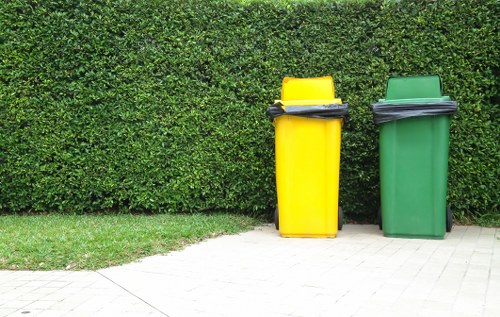
Scope: This policy covers activities commonly undertaken by a rubbish company service area: skip loading and unloading, vehicle movements on public roads and customer sites, manual handling of waste, segregation of recyclables, and safe operation of lifting equipment. It applies to the handling of both general waste and specialist materials where additional controls are required.
Responsibilities and Roles
Management responsibilities include ensuring that risk assessments are current, that safe systems of work are developed, and that necessary resources are allocated. Management will monitor compliance through inspections and audits. The operations manager shall ensure vehicle maintenance and driver competence for rubbish removal tasks.
Employee responsibilities
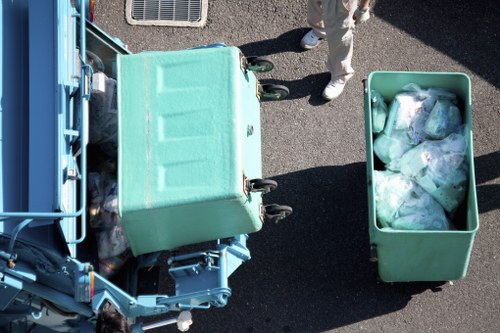
Staff must follow safe working procedures, wear issued personal protective equipment (PPE), and participate in toolbox talks and training sessions. Drivers must secure loads, comply with traffic laws during rubbish collection rounds, and confirm that skips are placed in locations that do not obstruct public highways or create trip hazards. Anyone observing unsafe conditions shall cease work where risk is significant and notify supervision immediately.We adopt a hierarchy of controls for risk reduction: eliminate hazards where possible, substitute hazardous processes, implement engineering controls such as barriers and secure skip fastening, apply administrative controls including safe work procedures, and provide PPE as a last line of defense. These measures apply across all rubbish services — from domestic clearances to commercial waste contracts.
Training and competency are essential. All staff involved in skip hire operations and rubbish collection will receive induction training, job-specific instruction on manual handling and vehicle loading, and periodic refresher courses. Records of training and medical fitness assessments will be maintained to demonstrate compliance and support role allocation based on capability.

Safe vehicles and equipment: Vehicles used for waste transport are subject to scheduled inspections and maintenance. Lifting equipment used for skip movements is examined and tested in accordance with applicable standards. Drivers and operators will use checklists before and after shifts to confirm that safety equipment, lights, and securing mechanisms are functional to reduce the risk of incidents during rubbish removal and transfer.

Operational Controls
Before any skip placement, a site assessment will be carried out to identify hazards such as underground services, pedestrian routes, and traffic flow. Where necessary, traffic management measures will be implemented. Clear signage, cones, and reflective barriers will be used to protect operatives and the public during skip hire operations.
Waste segregation and hazardous materials: Materials that may present chemical or biological risks require specialist handling. Our rubbish company service protocols include identification procedures for hazardous waste, isolation procedures, and liaison with licensed disposal facilities. Employees will not accept or handle materials they are not trained or authorised to manage.
Monitoring, review and continuous improvement
We will monitor performance through inspections, incident investigations, and key performance indicators such as near-miss frequency and lost-time injury rates. Findings will inform corrective actions and policy updates. This policy will be reviewed annually or following a significant incident to ensure it remains effective and aligned with best practice for skip hire and waste removal operations.Emergency response: Emergency procedures are in place for incidents such as spills, vehicle collisions, fires, or medical emergencies. All operatives will be familiar with reporting chains, first aid provisions, and spill containment kits relevant to rubbish clearance activities.
Policy acceptance: This Health and Safety Policy represents the commitment of Hendon Skip Hire to maintain a safe working environment for staff and the public. All personnel are expected to support and comply with the policy, contribute to risk reduction, and help foster a culture where safety is prioritised across every rubbish service and waste management task.